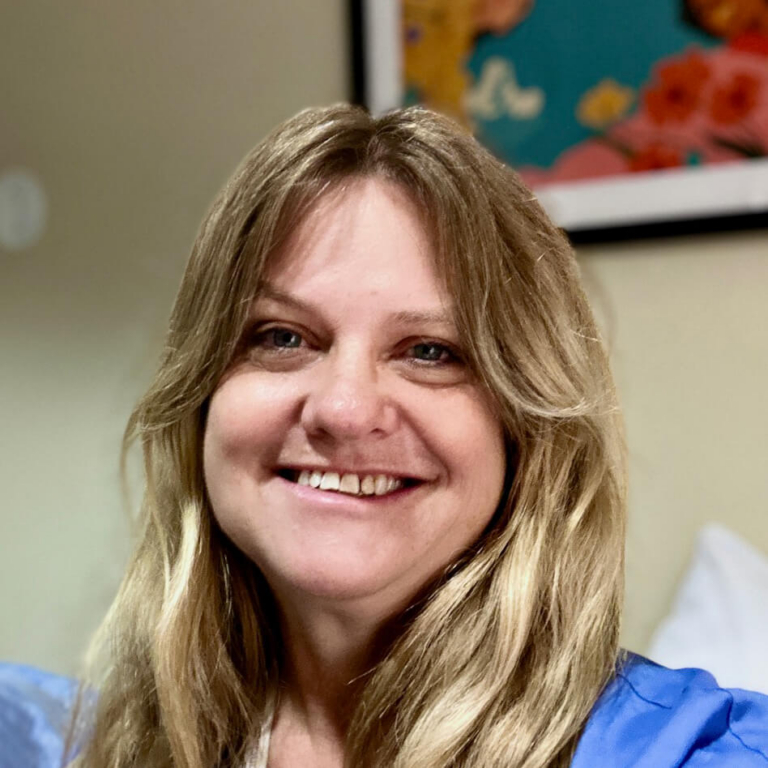
Get the scans you need on site. Our Registered Diagnostic Medical Sonographer, Sally Anderson, LPN, RDMS, provides obstetric and gynecologic ultrasound right here in our Tacoma office, including 8-week dating and 20-week anatomy scans.
What We Offer
Late Pregnancy Monitoring (36+ weeks)
What to expect when you get an ultrasound at Rainier OBGYN
Contrary to popular belief, Lorem Ipsum is not simply random text. It has roots in a piece of classical Latin literature from 45 BC, making it over 2000 years old. Richard McClintock, a Latin professor at Hampden-Sydney College in Virginia, looked up one of the more obscure Latin words, consectetur, from a Lorem Ipsum passage, and going through the cites of the word in classical literature, discovered the undoubtable source. Lorem Ipsum comes from sections 1.10.32 and 1.10.33 of “de Finibus Bonorum et Malorum” (The Extremes of Good and Evil) by Cicero, written in 45 BC. This book is a treatise on the theory of ethics, very popular during the Renaissance.
Ultrasound (Sonography) Q & A
When are the first scans?
Uterine fibroids, also called myomas or leiomyomas, are non-cancerous growths that develop in or on a woman’s uterus. While fibroids are not a serious threat to your health, they can be very uncomfortable and can cause problems with pregnancy.
You can have one fibroid or many, and they can range in size from too small to detect with the human eye to large enough to distend your abdomen. Some women have no idea they have fibroids, while others experience various symptoms.
Researchers are not entirely sure what causes uterine fibroids, but it appears that genetics may play a causal role. If a close family member experiences uterine fibroids, you may have an elevated risk.
How often should I have pregnancy ultrasounds?
Knowing what to look for can help you decide when to come in for a diagnostic work-up. Some of the symptoms of uterine fibroids include:
- Heavy menstrual bleeding
- Difficulty fully emptying your bladder
- Constipation
- Frequent urination
- Periods that last longer than a week
- Pains in the back or legs
It’s important to note that these symptoms are linked to several gynecologic conditions. Always listen to your body’s messages, and take action when you feel something is not right.
Whats the difference between 3D and 4D scans?
Smaller uterine fibroids or those that aren’t causing severe symptoms might not need treatment. A “watch and see” approach lets the team track fibroid growth and determine when to take action. This is often the approach when fibroids are detected during a pelvic exam.
If you are experiencing symptoms, medications can help by altering your hormone production. Some options can address heavy bleeding while also preventing pregnancy. A treatment called uterine artery embolization shrinks fibroids by injecting small particles into the arteries that supply blood flow to larger fibroids.
Radiofrequency ablation can destroy uterine fibroids by shrinking and softening fibroid tissue. It’s a minimally invasive procedure that can be very effective. In some cases, a surgical procedure called myectomy is the best way to remove fibroids. Many myectomies can be performed using minimally invasive surgical techniques.
Endometrial ablation is another option for treating uterine fibroids. This approach works by using a special instrument to destroy the lining of your uterus using an electric current or another source of heat.
To explore these and other options in greater detail, call or schedule a personalized visit online today.
How does an ultrasound scan determine the due date?
Smaller uterine fibroids or those that aren’t causing severe symptoms might not need treatment. A “watch and see” approach lets the team track fibroid growth and determine when to take action. This is often the approach when fibroids are detected during a pelvic exam.
If you are experiencing symptoms, medications can help by altering your hormone production. Some options can address heavy bleeding while also preventing pregnancy. A treatment called uterine artery embolization shrinks fibroids by injecting small particles into the arteries that supply blood flow to larger fibroids.
Radiofrequency ablation can destroy uterine fibroids by shrinking and softening fibroid tissue. It’s a minimally invasive procedure that can be very effective. In some cases, a surgical procedure called myectomy is the best way to remove fibroids. Many myectomies can be performed using minimally invasive surgical techniques.
Endometrial ablation is another option for treating uterine fibroids. This approach works by using a special instrument to destroy the lining of your uterus using an electric current or another source of heat.
To explore these and other options in greater detail, call or schedule a personalized visit online today.
Can family attend?
Smaller uterine fibroids or those that aren’t causing severe symptoms might not need treatment. A “watch and see” approach lets the team track fibroid growth and determine when to take action. This is often the approach when fibroids are detected during a pelvic exam.
If you are experiencing symptoms, medications can help by altering your hormone production. Some options can address heavy bleeding while also preventing pregnancy. A treatment called uterine artery embolization shrinks fibroids by injecting small particles into the arteries that supply blood flow to larger fibroids.
Radiofrequency ablation can destroy uterine fibroids by shrinking and softening fibroid tissue. It’s a minimally invasive procedure that can be very effective. In some cases, a surgical procedure called myectomy is the best way to remove fibroids. Many myectomies can be performed using minimally invasive surgical techniques.
Endometrial ablation is another option for treating uterine fibroids. This approach works by using a special instrument to destroy the lining of your uterus using an electric current or another source of heat.
To explore these and other options in greater detail, call or schedule a personalized visit online today.
Will my insurance cover an ultrasound? / How many?
Smaller uterine fibroids or those that aren’t causing severe symptoms might not need treatment. A “watch and see” approach lets the team track fibroid growth and determine when to take action. This is often the approach when fibroids are detected during a pelvic exam.
If you are experiencing symptoms, medications can help by altering your hormone production. Some options can address heavy bleeding while also preventing pregnancy. A treatment called uterine artery embolization shrinks fibroids by injecting small particles into the arteries that supply blood flow to larger fibroids.
Radiofrequency ablation can destroy uterine fibroids by shrinking and softening fibroid tissue. It’s a minimally invasive procedure that can be very effective. In some cases, a surgical procedure called myectomy is the best way to remove fibroids. Many myectomies can be performed using minimally invasive surgical techniques.
Endometrial ablation is another option for treating uterine fibroids. This approach works by using a special instrument to destroy the lining of your uterus using an electric current or another source of heat.
To explore these and other options in greater detail, call or schedule a personalized visit online today.